
nbn® 2000 explained: is hyperfast internet worth it?
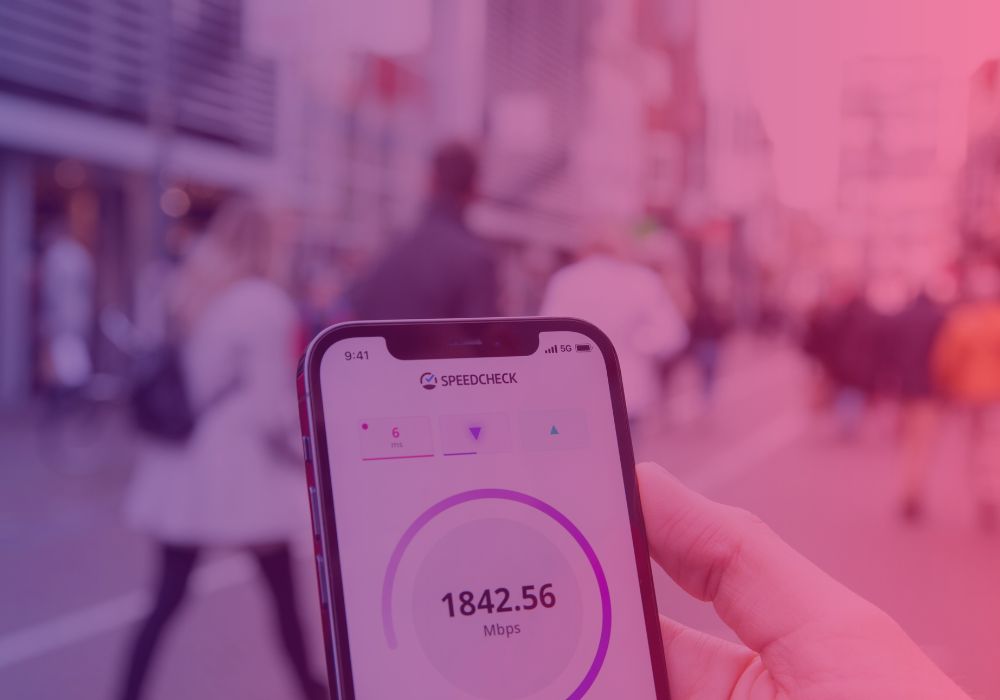
nbn® 2000, officially called Home Hyperfast, is the newest and fastest speed tier on the National Broadband Network. It launched in September 2025 and offers download speeds of up to 2000 Mbps, which is 2 Gbps, double the previous top tier of nbn® 1000.
But there is a lot more to the story than the headline number.
Hyperfast speeds come with real conditions around where you live, the equipment you own and the price you pay.
We don’t sell nbn® 2000, our fastest plan is nbn® 1000, so consider this an honest look at how nbn® 2000 works, and why nbn® 1000 is still the practical choice for most homes. Read on for the breakdown.
Slow Internet Connection?
Let Swoop get you connected FAST! Check if your address can get fast and reliable internet.
Enter your addressHow fast is nbn® 2000?
On paper, nbn® 2000 offers a maximum download speed of 2000 Mbps, with uploads up to 200 Mbps on full fibre and 100 Mbps on HFC.
But maximum speeds are just that, a theoretical ceiling. What you actually see depends on your provider, your equipment and how busy the network is. Typical evening speeds for hyperfast are still settling across the market, and without the right equipment most homes won’t get close to the 2000 Mbps headline.
Is nbn® 2000 available at my address?
nbn® 2000 is only available on full fibre, known as FTTP, and on some HFC connections.
Only a small number of providers sell it so far.
We don’t offer nbn® 2000 ourselves.
Instead we offer our very popular nbn® 1000 plan, the fastest speed most homes can realistically use today. Check your address here to see what speeds you can reach, and if you qualify for full fibre, look at the $0 nbn® fibre upgrade.
The catch: most homes cannot use the full speed yet
Getting the full benefit of a 2000 Mbps plan takes the right equipment and enough demand to make use of it, and for most homes today, nbn® 1000 already covers everything they need.
An old or standard router will bottleneck the connection
A standard or older gigabit router caps at 1000 Mbps over ethernet, throttling a 2 Gbps connection to around 1 Gbps. To go faster you need a multi gigabit router with a 2.5 Gbps or faster WAN port, WiFi 6E or WiFi 7, and Cat6a or Cat7 cabling.
This part is easy to solve. Our eero 7 is a WiFi 7 mesh router that supports speeds up to 2.5 Gbps and is built to be future proof. Pair it with an nbn® 1000 plan today and your network is ready for higher tiers later, without the hyperfast premium.
You may need a new nbn® connection box
Hyperfast also relies on newer full fibre connection boxes, called NTDs, that handle multi gigabit speeds, so getting on the tier can mean a hardware change at the nbn® end too.
Most single devices cannot use 2 Gbps anyway
A single laptop, phone or console rarely exceeds around 1 Gbps in real use, even over WiFi 7. Hyperfast only pays off when many people run heavy tasks at once, which is rare in a typical home.
Faster speed does not fix latency
Speed and latency are different. Network latency, what matters for gaming and video calls, depends on server distance and routing, not your top speed. Going from nbn® 1000 to nbn® 2000 helps with big downloads, not lag.
It costs significantly more
Hyperfast is the most expensive residential tier, priced well above a comparable nbn® 1000 plan. Prices vary by provider and change with promotions, so it is a significant ongoing premium for speed most homes cannot fully use.
The provider matters more than the tier
Real world speed depends heavily on your provider’s network capacity and how many customers share it at peak times. Some providers overcrowd to cut costs, causing evening congestion. We don’t overcrowd our network, so you get reliable speeds when it matters, on any tier.
Why nbn® 1000 is the smarter choice for most homes
For most Australian homes, nbn® 1000 is the sweet spot of real world speed, price and equipment you can use today.
It delivers up to 1000/100 Mbps with a typical evening speed of 890 Mbps, enough for 10 or more users, top tier gaming, working from home and multiple 4K and 8K streams at once.
We publish that 890 Mbps evening speed, measured between 7pm and 11pm, as part of our commitment to transparency. Hyperfast evening speeds are still unestablished across the market, so the 2000 Mbps headline is not what most homes would see at peak times.
Best of all, nbn® 1000 delivers its full speed without you buying new multi gigabit gear. With the eero 7, our Wi-Fi 7 mesh router, you get fast, reliable whole home speeds today and stay future proofed for higher tiers.
If gigabit is more than you need, nbn® 500 is a strong value option for heavy streaming, moderate gaming and working from home.
You also get unlimited data, no lock in contract and local experts to support you.
Should you wait for nbn® 2000?
Hyperfast suits a small group of very high demand homes and businesses with full fibre, new multi gigabit equipment and many heavy users at once.
For most, nbn® 1000 gives you the fastest speed you can realistically use, at a more accessible price, on widely available gear.
Check what speeds are available at your address here and see if you can get on one of our high speed nbn® plans.
Check out our nbn® plans
Typical evening speed (7pm-11pm)
Mbps
Download
Mbps
Upload
per
month
Typical evening speed (7pm-11pm)
Mbps
Download
Mbps
Upload
per
month
Typical evening speed (7pm-11pm)
Mbps
Download
Mbps
Upload
per
month
Typical evening speed (7pm-11pm)
Mbps
Download
Mbps
Upload
per
month
nbn® 2000 FAQs
What is nbn® 2000?
nbn® 2000, or Home Hyperfast, is the fastest tier on the National Broadband Network, offering up to 2000 Mbps (2 Gbps), double an nbn® 1000 plan.
How fast is nbn® 2000?
Up to 2000 Mbps download, with uploads up to 200 Mbps on full fibre and 100 Mbps on HFC. Real world and typical evening speeds are lower, and depend on your provider, equipment and network load.
Is nbn® 2000 available everywhere?
No. Only on full fibre, FTTP, and some HFC connections. FTTN, FTTC and Fixed Wireless homes are not eligible unless upgraded to full fibre, and only a small number of providers offer it so far.
Do I need a new router for nbn® 2000?
If you have an old or standard gigabit router, yes, since those cap at 1000 Mbps. You need a multi gigabit router with a 2.5 Gbps or faster WAN port, WiFi 6E or WiFi 7, and Cat5e or Cat6 cabling. Our eero 7 supports speeds up to 2.5 Gbps and is ready for higher nbn® tiers.
What is the difference between nbn® 1000 and nbn® 2000?
nbn® 1000 is up to 1000/100 Mbps. nbn® 2000 is up to 2000/200 Mbps. nbn® 2000 also costs more, reaches fewer addresses, and needs multi gigabit equipment to hit its full speed. For most homes, nbn® 1000 delivers all the speed they can realistically use.
Does Swoop offer nbn® 2000?
We don’t currently sell nbn® 2000. Our fastest plan is nbn® 1000, up to 1000 Mbps with a typical evening speed of 890 Mbps, which for most homes is the fastest speed you can realistically use. Paired with the eero 7, it stays future proof for higher tiers without the hyperfast price.
Hear from happy customers!
Slow Internet Connection?
Let Swoop get you connected FAST! Check if your address can get fast and reliable internet.
Enter your address